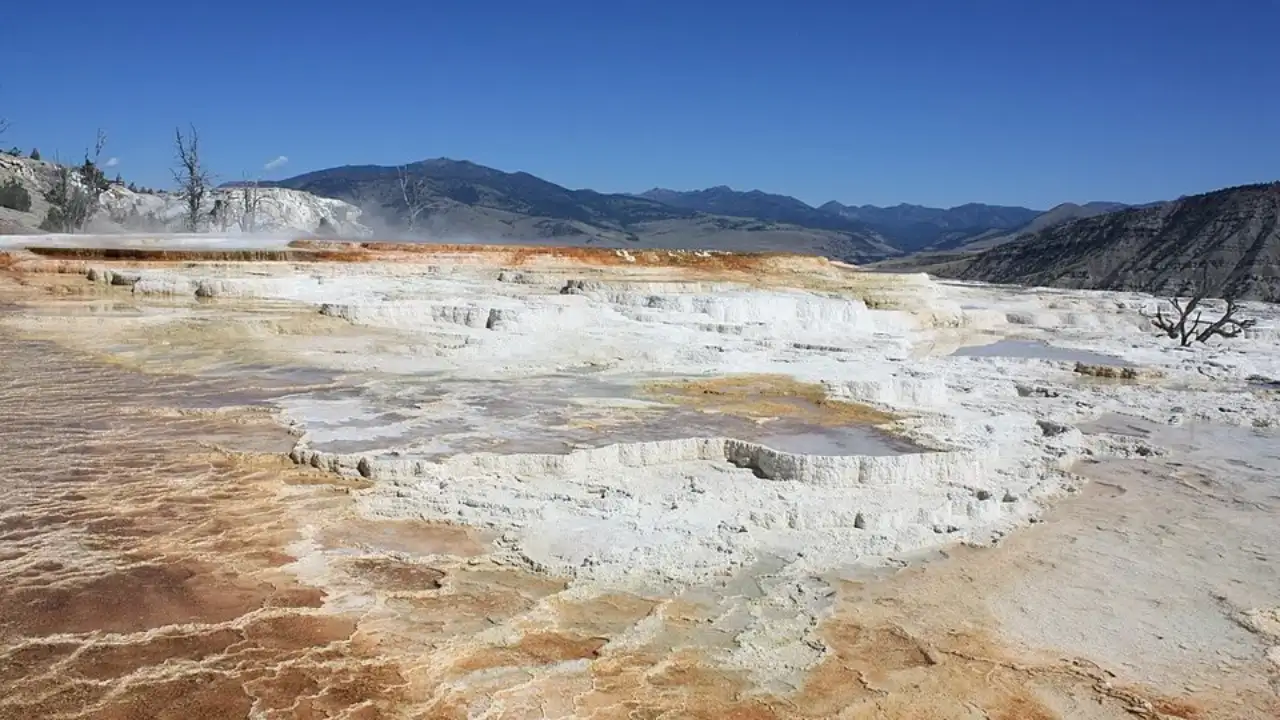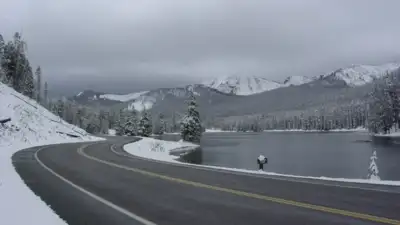
Sylvan Lake in Yellowstone National Park, May 2006 | Wikimedia Commons
Scientists used fluorescent dye to study the groundwater in Yellowstone National Park in June 2005, and found that water that was disappearing into loose rock deposits travelled southeast through the underground system before emerging at Mammoth Hot Springs. Geological Survey reported that groundwater covered a distance of 1.45 miles and had a vertical drop of about 500 feet in less than one day. The U.S. The findings were documented by USGS hydrologists Lawrence E. Spangler and David D. Susong, who found a rapid underground connection between the area where stream water disappeared and the spring where it re-emerged. Scientists followed water beneath Sylvan Pass
During the June 2005 field investigation, scientists used dye tracing to follow water that disappeared into talus deposits, which consist of loose rock fragments accumulated on slopes. The results also documented how quickly that groundwater could move, since a journey of 1.45 miles in less than a day indicated a highly permeable underground pathway between the two locations. The 2005 dye test supplied a direct measurement of that connection at Sylvan Pass, and documented both the rapid arrival of groundwater at Mammoth Crystal Springs and the longer period that was required for most of the injected dye to pass through the system.
The dye was used to track the water’s movement through the subsurface, and researchers detected the tracer at Mammoth Crystal Springs, which established a connection between the area where the stream lost water and the spring farther away. It was established that water that disappeared into the rock deposits at Sylvan Pass was not simply lost from the local surface-water system, and at least part of it travelled underground towards Mammoth Crystal Springs. The investigation took place in the Sylvan Pass area of Yellowstone National Park, Wyoming, and researchers wanted to establish how surface water contributed to groundwater flow reaching Mammoth Crystal Springs. The researchers also examined the relationship between groundwater flow and changes in spring discharge, and found that spring flow varied considerably as a response to snowmelt runoff and precipitation. The water that emerged at the spring-fed lake contained high concentrations of suspended sediment, which increased its turbidity, and the report identified these observations as further evidence of the aquifer’s high permeability and rapid response to changing water conditions. The USGS report linked the rapid movement to the aquifer’s physical characteristics, with its findings being specific to the Sylvan Pass area and the groundwater system that was examined by the researchers. The work formed part of a larger effort to understand the relationship between surface water and groundwater in Yellowstone National Park, and such connections matter when scientists assess where water travels after it disappears from streams, how springs respond to weather and snowmelt, and how groundwater contributes to surface-water systems.