
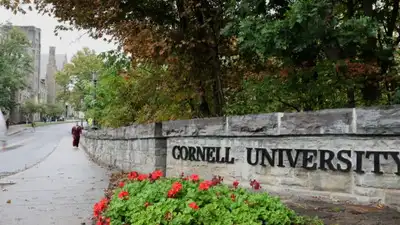
File photo: Cornell University
At Cornell University, disciplinary action against seven fraternity members accused of sexual misconduct ranged from expulsion and suspension to a requirement that some of the men study sexual harassment and write “reflection papers” on their conduct, according to disciplinary records obtained by the New York Times. She later told police that he had struck her during intercourse hard enough to leave bruises and had manipulated her into ingesting ketamine. Two men were expelled, two were suspended and three received lesser sanctions after a Title IX panel reviewed the allegations. The punishments have since drawn scrutiny, including over how Cornell decided what each man was responsible for and what forms of accountability were considered appropriate. The disciplinary records show that Newell had sent a Snapchat message encouraging other fraternity members to enter the bedroom while Jane Doe was undressed.
Because of federal student-privacy laws, lawyers for some of the men disputed the characterisation of their clients’ conduct, while Cornell declined to comment.
Jane Doe’s lawyer, Thomas Giuffra, said the sanctions did not reflect the severity of the allegations.
Tompkins County district attorney Matthew Van Houten had declined to prosecute the case in 2024. Jane Doe originally went to the Chi Phi house at about 11pm on October 19, 2024 to visit Ingalls after spending the evening drinking at a bar, according to the records reviewed by NYT. She told investigators that her intoxication level was around 5 out of 10 when she arrived.
The new disciplinary summaries therefore offer the first detailed public account of how Cornell apportioned responsibility among the seven men, even as questions remain over whether any of the conduct will ultimately result in criminal charges. The NYT reported that Matthew Ingalls and Jonathan Newell were expelled.
The university has said that description was inaccurate. His lawyer said he had never been accused of or found responsible for rape and was not present during sexual activity. She said the men gave her ketamine and alcohol and that, as the night continued, other men engaged in sex acts with her without her consent while she was incapacitated. She later appointed state Attorney General Letitia James as a special prosecutor with the power to bring criminal charges, according to the NYT.
The case has also sparked controversy over a claim in Jane Doe’s lawsuit that the accused men were given an opportunity to mitigate their conduct by submitting essays to Cornell. The disciplinary records show, however, that some of the men were required to write reflection papers as part of their sanctions. None of the seven men has been criminally charged. All have denied wrongdoing, while Cornell’s Chi Phi fraternity has been banned from campus. The panel found Ingalls responsible for sexual assault and concluded that he had manipulated, exploited and endangered Jane Doe for his own interests and the entertainment of others. Newell had been accused of sexual assault and of encouraging other fraternity members to enter a bedroom where Jane Doe was undressed through a Snapchat message. Winston Lee and Gillio Lopes were suspended. Lee received a two-year suspension followed by disciplinary probation, while Lopes was suspended for three semesters and placed on two years of probation. Both were also ordered not to contact Jane Doe and required to complete sexual-harassment training and write reflection papers. Diego Sarabia, who had already graduated, was declared persona non grata and barred from Cornell’s campus for three years. Jane Doe had accused him of forcibly kissing her. Scott Norris and Scott Kretzschmar received lighter sanctions. They were ordered not to contact Jane Doe and to complete training on sexual harassment, social-media use and bystander intervention, as well as write reflection papers. Kretzschmar was not found responsible for sexual assault. A recently unsealed lawsuit showed that Cornell instead found him responsible for a lesser offence of attempted sexual exploitation. After she got there, Ingalls asked whether she wanted a threesome with Newell. The university’s disciplinary findings are separate from the criminal investigation. After Jane Doe’s lawsuit became public in September, New York governor Kathy Hochul ordered an independent review of Cornell’s handling of the case. You use AI every day. Now get your AI Quotient. Take the AIQ test.