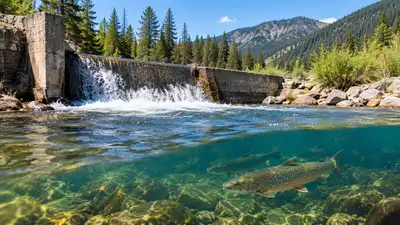
AI Representation: Idaho’s Red Ives Creek Dam, built in 1935 to provide hydroelectric power to the Red Ives Ranger Station, was removed in August 2021. Image credits: Chatgpt
A roughly 3- to 5-foot-tall and 25-foot-wide dam on Red Ives Creek Sources differ on the dam’s size and age. The Open Rivers Fund lists it as 3 feet tall and built in 1930, while American Rivers gives 5 feet and 1935, a date the Restoration Partnership also uses and both put its width at about 25 feet. That project page adds that the Civilian Conservation Corps built it and the Forest Service abandoned it in 1960, though Trout Unlimited Idaho says it powered the station into the mid 1980s. Removal in August 2021 and a project cost of $127,693 Trout Unlimited and the U.S. Forest Service removed the Red Ives Creek Dam in August 2021. The project cost $127,693, according to the Open Rivers Fund’s project page. The removal followed 20 years of waiting, American Rivers said. Nearly 60 cubic yards of concrete and steel were removed, the Restoration Partnership’s project page reports. The crews restored the creek profile using boulders and gravel from behind the dam, stabilized about 200 feet of bank and put 15 logs into place for habitat. A separate, later phase upstream of the former dam placed about 1,400 logs along roughly a mile of Red Ives Creek, in work completed in 2023 and 2025, Trout Unlimited reported. Critical habitat for bull trout was designated in 2005 and revised in 2010, Idaho’s species website says and American Rivers highlights the 2010 designation.
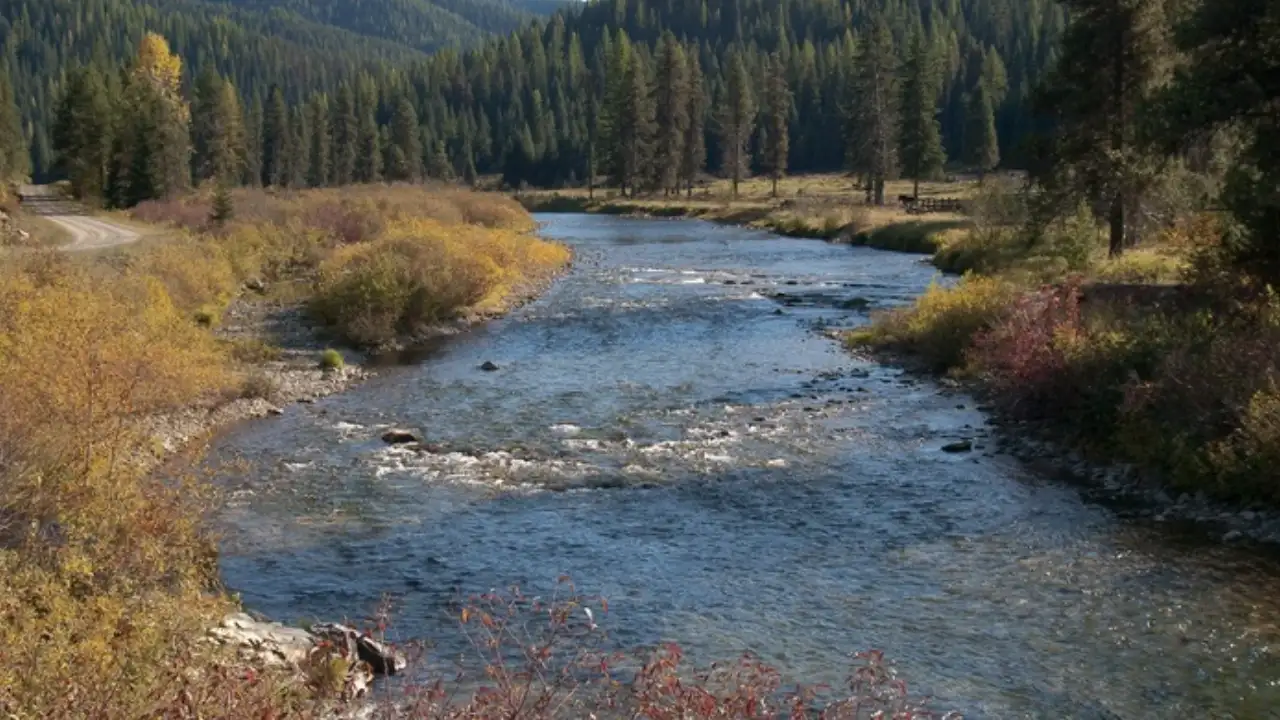
Because many small barriers pass fish at some flows but not others, sandpoint Magazine notes that bull trout spawn in the fall, which matters. The structure held much more concrete and rebar than the partnership had expected, Trout Unlimited Idaho reported, but the job went quickly once the contractors started hammering. Large dams draw most of the attention in discussions about fish and rivers, but small, old structures matter too. Most of them stay in western rivers long after their usefulness has passed. Even a structure a few feet high is enough to alter the way water flows and the movement of fish. In northern Idaho, one such dam sat low in a creek in a national forest. It had been built to provide power for a remote Forest Service ranger station. It remained long after it was useful and affected fish that most visitors never noticed. It was a small concrete structure on Red Ives Creek, owned by the U.S. Forest Service, that supplied power to the Red Ives Ranger Station. The dam restricted flows and increased water velocities, which reduced fish passage through the year and disrupted the movement of wood and gravel, the Open Rivers Fund notes. The fund also identified a hidden open shaft beside the dam, two feet wide and four feet deep. Five miles of habitat for threatened bull trout in the St. Joe River headwaters Removal opened fish passage to five miles of habitat for bull trout and westslope cutthroat trout and the Restoration Partnership describes those miles as spawning and rearing habitat. Idaho Fish and Game prohibits harvest of bull trout and only catch-and-release fishing is permitted. The St. Joe River at Red Ives in Idaho’s Panhandle, where the removal of a small obsolete dam reopened access to upstream trout habitat. Image credits: Wikimedia Commons The headwater tributaries of the St. Joe River hold the last remaining bull trout population in the Coeur d’Alene Core Area, which is why Red Ives Creek was selected for restoration, the Restoration Partnership explains. You use AI every day. Now get your AI Quotient. Take the AIQ test.