
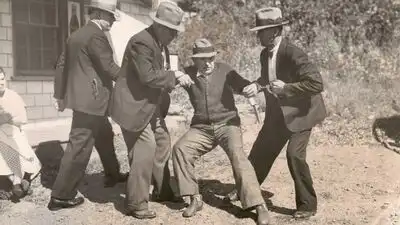
Cliser, flanked by Sheriff E L Lucas (left) and Deputy Claude Shaver (Photos: clisereviction/blogspot)
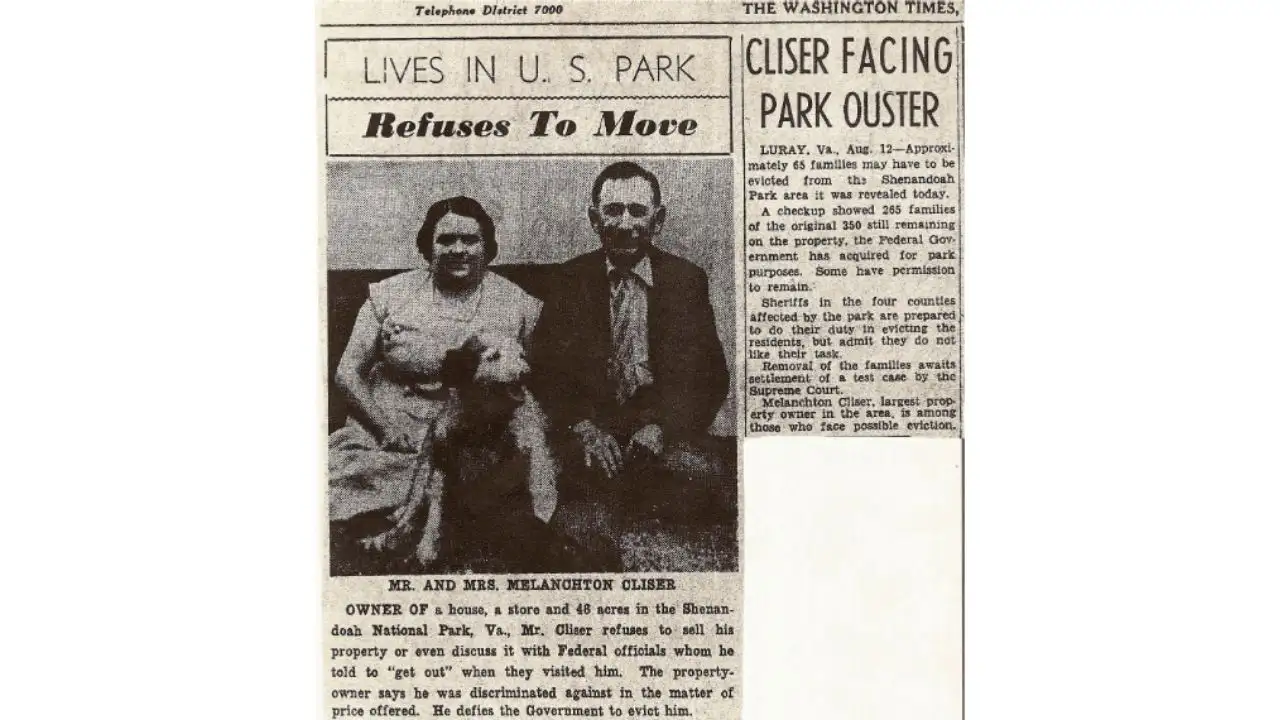
In 1935, Melanchton Cliser and his family were forced out of their 46-acre property in Virginia as the state pushed ahead with plans for what would become Shenandoah National Park. Cliser owned the land along US 211 and also operated a gas station there. National Park Service official Arno Cammerer, on February 1, 1934, announced that the federal government would not accept land for the park until all residents had left the area. The state eventually paid an average of about $12.50 per acre, but payments differed greatly. Some owners received as much as $131 per acre, while others received as little as $1 per acre. In October 1935, Melanchton Cliser and his family were among those who were forcibly removed. The sheriff and his deputies arrived at the family’s home along US 211. Cliser was reportedly offered $4,855 for his property but he never cashed the money
Because many residents wanted to remain in their homes, resistance followed. In 1933, H M Cliser of Beahm wrote to Governor Pollard, “I am relying wholly on the Constitution in this matter; therefore have nothing to arbitrate.
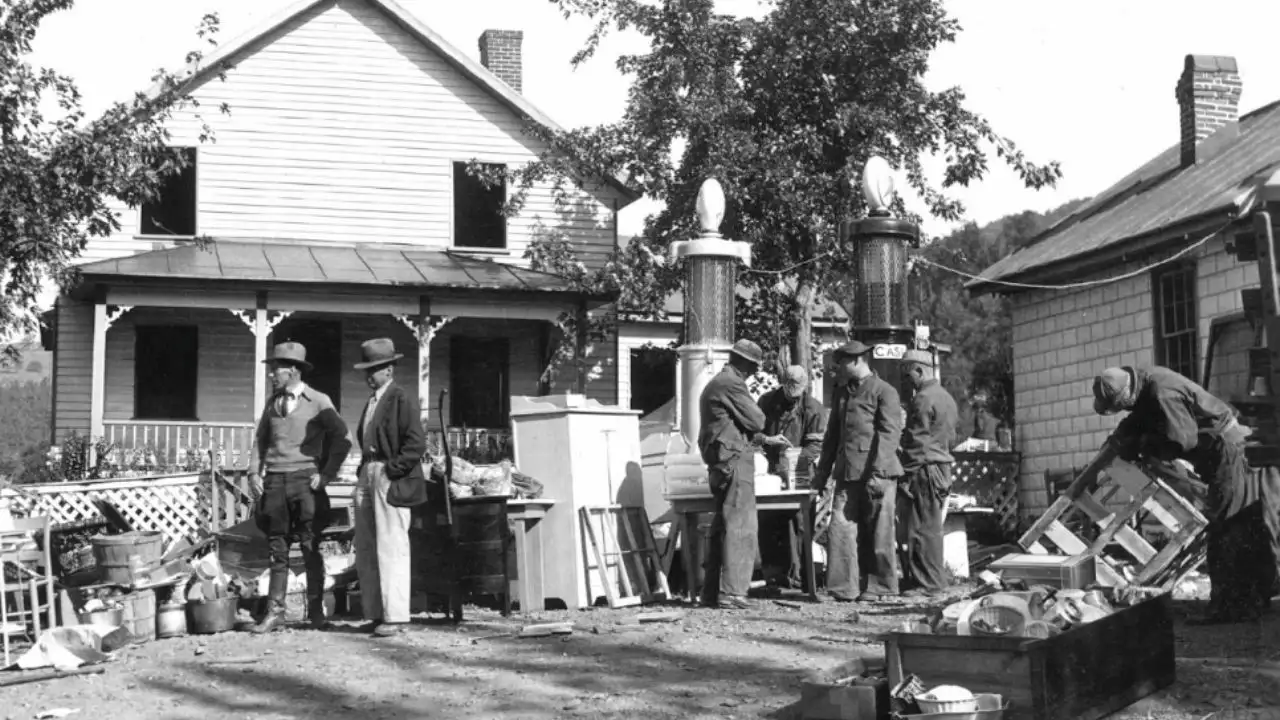
The deputies handcuffed Cliser, took the family’s belongings out of their home and then sealed the house, according to Virginia Center for Digital History. Many believed their land had been valued according to its agricultural potential rather than what it would be worth as part of the park. When he refused to leave, the local sheriff and his deputies came to remove him and his family. The forced eviction was part of a much larger and difficult process in which hundreds of families were removed from land that was being acquired for the future national park. The idea that mountain residents were an obstacle to the park became increasingly influential. Some had already moved voluntarily, but many others did not want to leave. Landowners also objected to the value assigned to their properties. For residents such as Cliser, the dispute was about more than money. Some simply did not want to leave the homes and communities where they had lived. Landowners challenged the removal process in different ways. Some appealed property valuations, while others organised against the state’s actions or appealed directly to political leaders. The resistance sometimes resulted in direct confrontations. When he continued to resist leaving, officers handcuffed him, removed the family’s belongings and sealed the house.
In 1924, Secretary of the Interior Hubert Work appointed the Southern Appalachian National Park Committee to study possible locations for a national park south of Pennsylvania. In 1926, Congress authorised the creation of a 521,000-acre Shenandoah National Park. The state legislature passed the Public Park Condemnation Act in 1928. On December 26, 1935, the federal government accepted title to 176,429.8 acres from Virginia, exceeding the 160,000-acre minimum needed for the park to be established. On July 3, 1936, President Franklin Roosevelt and thousands of others attended the official dedication ceremony at Big Meadows. About 300 families were still living inside the park at that time. By early 1938, between 500 and 600 families had permanently left their homes in the park. In 1934, the park service secretly identified 43 families of ‘aged and especially meritorious’ people who were allowed to remain on their land rent-free after selling their property to the state.
He therefore pushed for a blanket condemnation law that would allow the state to acquire the required land through eminent domain.
Federal government said residents had to leave before accepting the land from Virginia. The conflict became especially serious after the federal government made it clear that residents would have to leave before it would accept the land from Virginia. The idea of creating a national park in Virginia gained serious attention in the 1920s. The committee visited the Blue Ridge and later recommended the area between Front Royal and Waynesboro. However, the federal government could not use federal money to buy the land. Virginia and private groups had to raise the money needed for the purchases. The task proved much as thousands of separate tracts were involved, and many landowners did not have clear titles or agreed boundaries for their properties. William E Carson, head of Virginia’s Commission on Conservation and Development, believed buying the land individually would take too long. It allowed the state to file one condemnation case in each of the eight counties involved and created a Board of Appraisal Commissioners to determine the value of individual properties. . The process of acquiring land became closely linked to the question of what should happen to the people already living there. Several options were considerd including allowing residents to remain after selling their land, moving some families while allowing others to stay, or requiring everyone to leave. Despite the disputes, the park project moved forward. Not everyone was forced to leave. For most families, however, leaving the mountains marked the end of their lives there. The park service also began removing many signs of previous settlement by burning and tearing down structures. Catch the latest World News and Live updates. Download the TOI app.
The creation of Shenandoah National Park had been discussed for years. Blue Ridge Mountains offered a scenic location for a national park that would be easily accessible to millions of people living in eastern US cities. The park was also expected to bring economic benefits to Virginia through tourism. But turning the plan into reality meant acquiring thousands of individual pieces of land. Many people living in the mountains did not want to leave their homes.