
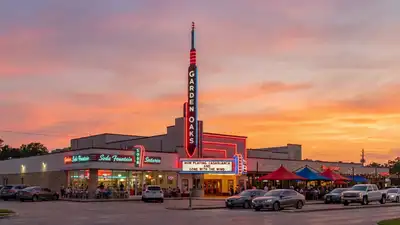
The Garden Oaks Theater opened in 1947 as a 700-plus-seat Art Deco cinema and is now the focus of a preservation effort (Image Credit: Arthouse Houston)
Opened in 1947, the Art Deco-style cinema became part of the character of the Garden Oaks and Independence Heights area, eventually serving the community for decades before being converted into a church. It had raised more than $2.8 million through its community campaign and was moving forward with plans to purchase the property and transform it into an arts and film center, according to Arthouse Houston. The Garden Oaks Theater opened its doors in 1947, during the postwar period when neighbourhood movie theaters were important gathering places across American cities. The cinema seated more than 700 people. In February, Arthouse Houston reached an agreement to purchase the Garden Oaks property for $7.1 million, the same amount the investment fund had paid for it. It had raised more than $2.8 million toward its immediate $3.1 million fundraising target, according to Arthouse Houston. Anderson participated in a July fundraising event that attracted nearly 500 people and generated approximately $300,000 for the campaign.
The theater is one of the few remaining examples of its kind in Houston, according to Arthouse Houston. That left several hundred thousand dollars still to be raised, although the organisation said it was proceeding into the next phase of its plans. For generations of Houston residents, the Garden Oaks Theater was more than a place to watch a movie. Nearly eight decades after its opening, the building found itself facing a very different future. Its new owner had planned to demolish the property, putting one of Houston’s remaining historic cinemas at risk. But instead of allowing the theater to disappear, a local preservation campaign brought together residents, donors and filmmakers to try to reclaim the site. Its Art Deco design also gave the building an architectural identity that distinguished it from ordinary commercial properties. The organisation then faced a race against time to raise enough money to complete the purchase and prevent demolition. The campaign initially involved a much larger fundraising challenge, but the nonprofit ultimately developed a financing strategy that combined community donations, major pledges and other support. The campaign received significant attention from Houston-raised filmmakers Wes Anderson and Richard Linklater. Saving the building is only the first part of Arthouse Houston’s larger plan. The nonprofit envisions turning the former theater into an Arts & Film Center that combines historic preservation with new cultural uses. The proposed project would include screening spaces, production studios, classrooms, a microcinema and flexible performance areas. Plans also call for restoring recognisable elements of the original theater, including its marquee, neon blade sign, grand staircase handrail and murals.