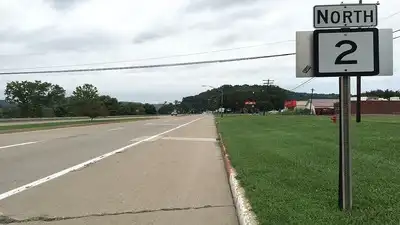
Representative image of a West Virginia State Route. (Image Credits: Wikimedia)
A section of West Virginia Route 2 was rebuilt in 1971-72 using a mixture of bottom ash and boiler slag from power plants as aggregate for a Portland cement-stabilized base . The road later provided excellent service for more than 10 years, and by using ash-based material, construction costs were substantially reduced when compared to conventional aggregates. The FHWA record identifies the Route 2 project as a granular base project near Wheeling, West Virginia and the documented mixture contained about 54% boiler slag, 46% bottom ash, and 5% Portland cement by aggregate weight. Processing the ash for pavement use The FHWA 1997 guidelines described several requirements for the preparation of bottom ash and boiler slag for stabilized pavement applications.
Because it can contain fly ash, both materials can be dewatered relatively quickly in one or two days, but ponded ash requires longer drainage. Representing a large-scale deployment of coal combustion byproducts in highway infrastructure, the project utilized aggregates supplied by American Electric Power Company’s Mitchell and Kammer plants. Bottom ash from one station was combined with boiler slag from the other and blended in order to meet the gradation requirements established by the West Virginia Department of Highways for cement-treated base courses. In addition, for the finished mixture to be compacted properly, the material must also have a suitable particle-size distribution. Generally, bottom ash is more well graded in comparison to boiler slag, but it can also contain agglomerated or popcorn-like particles, which should be reduced in size or removed by screening as per the FHWA.
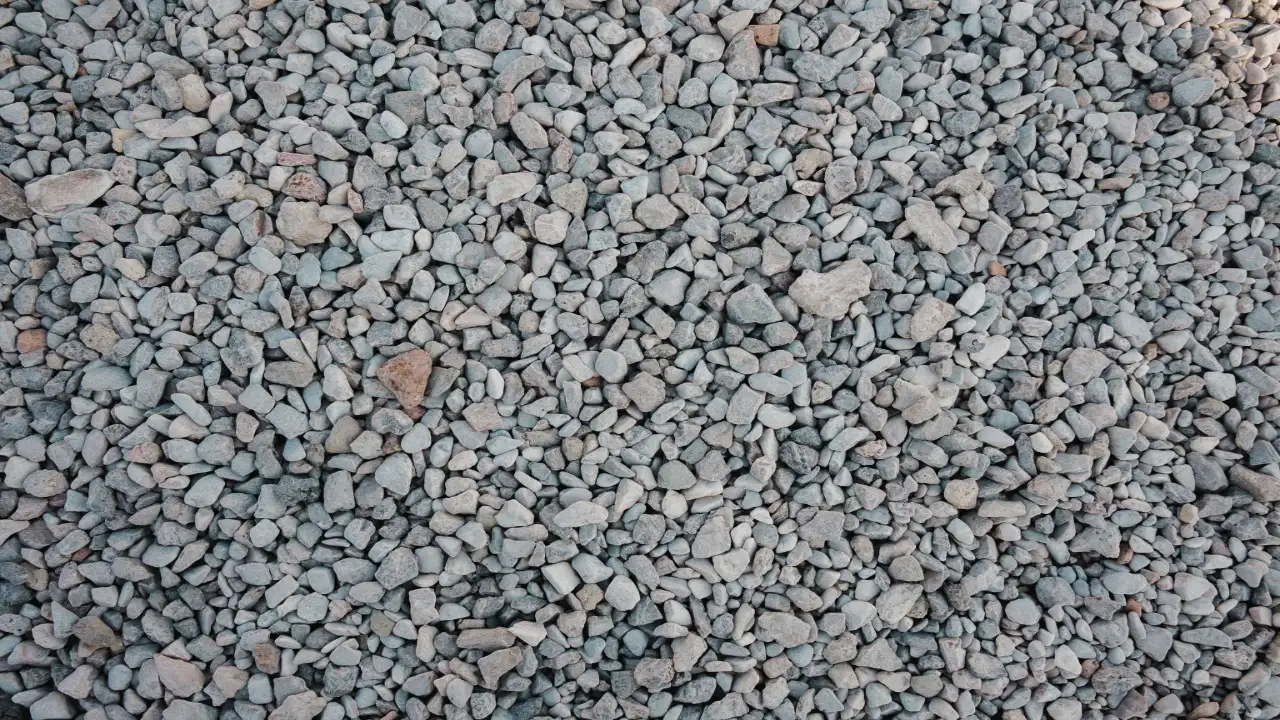
4 and No. 40 sieve sizes but if necessary the materials can be blended with other aggregates to obtain the specified gradation. The engineering properties of materials were also documented: bottom ash generally had a specific gravity between 2.1 and 2.7, while boiler slag generally ranged from 2.3 to 2.9. In abrasion testing, bottom ash recorded losses between 30% and 50%, and boiler slag between 24% and 48%. Since bottom ashes had losses below 45%, they met the ASTM requirements for soil-aggregate base and subbase materials. Representative image of a road base for construction. (Image Credits: Pexels) West Virginia expanded the use of cement-stabilized ash The Route 2 project was followed by the additional use of cement-stabilized bottom ash in West Virginia. Beginning in 1984, several hundred miles of low-volume secondary roads were reconstructed using cement-stabilized bottom ash, and most carried between 150 and 1,500 vehicles per day. The FHWA cited Route 34 in Putnam County near Charleston as an example where a 150-millimeter bottom ash subbase was placed and compacted, followed by successive 150-millimeter lifts of cement-treated bottom ash on top of it. Moreover, West Virginia was not the only state to use bottom ash and boiler slag in pavement; a 1992 survey found that other states, including Arkansas, Kentucky, Mississippi, Texas and Utah used bottom ash as a stabilized base or subbase application. In addition, reports also found that in 1996 approximately 0.6 million metric tons of bottom ash and boiler slag were being used as a road base or subbase, although the exact share used in stabilized applications was not identified. Ultimately, the Route 2 reconstruction demonstrated the use of bottom ash and boiler slag in a cement-stabilized base.
On the other hand, boiler slag tends to have a uniform particle size between the No. Other materials to be removed before construction, identified by the agency was coal pyrites, which can oxidise or weather over time, leading to expansion and possible popouts from the pavement matrix. which when present in detrimental qualities can be concerning While some bottom ash also contains soluble sulfates. You use AI every day. Now get your AI Quotient. Take the AIQ test.