
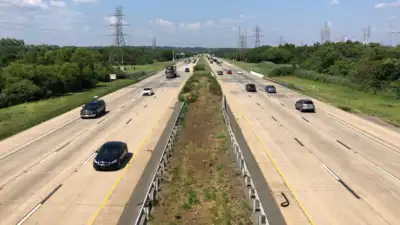
I-495 northbound at the 12th Street interchange in Wilmington | Wikimedia Commons
The project used approximately 8,300 cubic yards of landfilled fly ash, which was placed in 12-inch loose layers and compacted with a smooth-drum vibratory roller. The completed embankment ranged from 4 to 16 feet deep along a section about 450 feet long. The material was used for two interchange ramps that connected I-495 with Edgemoor Road in Wilmington.
Settlement was measured at designated settlement plates during the monitoring period, and the EPA reported less than one-eighth of an inch of settlement at each location.
A Transportation Research Board report that documented the project says that the fly ash met or exceeded Delaware Department of Transportation compaction requirements. The EPA report says that engineers installed four groundwater monitoring wells and four permeate collection drains, while also collecting and analysing runoff and leachate from the area around the ash fill. Its assessment also found no significant environmental effects during the two-year monitoring period. The report compared the in-place soil characteristics with those of well-compacted granular soil, and the measurements gave engineers information about how the fly ash behaved after being placed beneath the highway ramps. Engineers also monitored groundwater conditions around the fill and examined whether material from the ash moved into nearby soil or water. The findings provided additional data on the long-term performance of the highway embankment and the conditions that surrounded the construction site. Part of a wider highway experiment
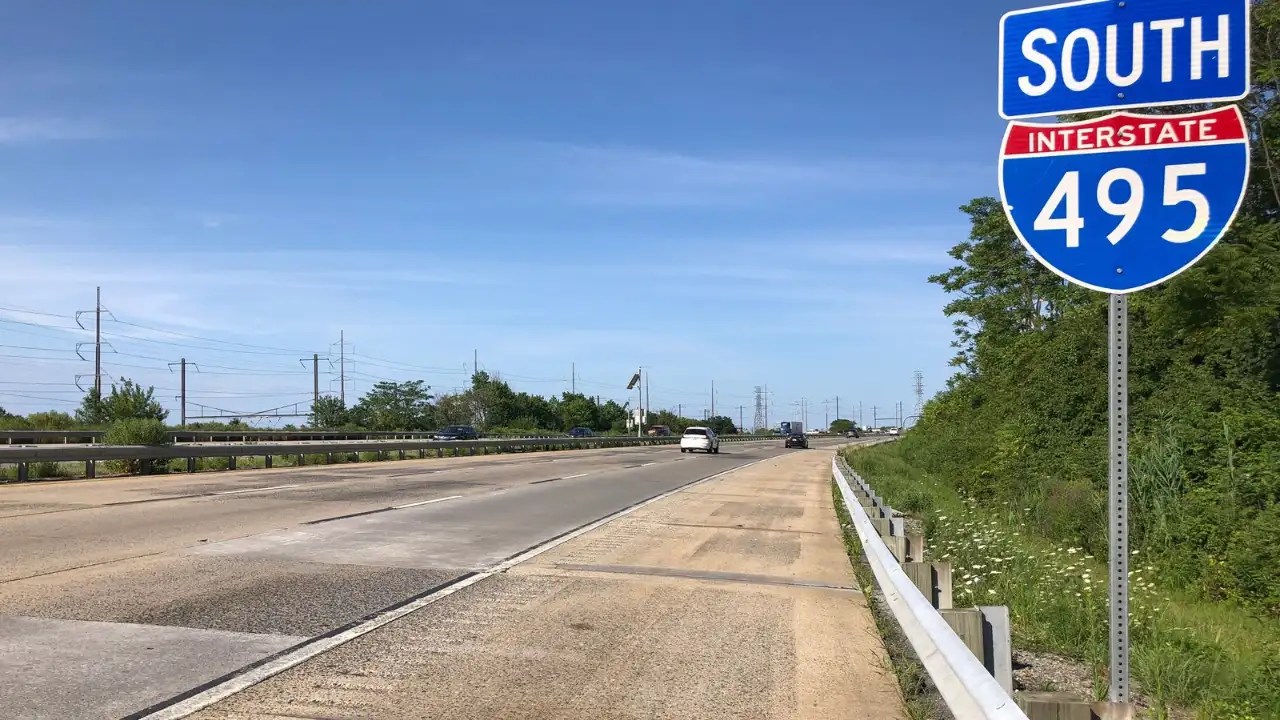
Beneath part of the I-495 interchange near Wilmington was a large quantity of material that had previously been stored as a coal-combustion byproduct. Because it did not have to become part of the finished road surface, and engineers could place it beneath the roadway while monitoring its physical performance and environmental conditions, fly ash could be used in large quantities as embankment material. The ramps that were built in 1987 were therefore more than a conventional road construction project.
The Wilmington project also became part of federal documentation on the use of coal fly ash in highway construction, and the recorded results included limited settlement during monitoring and no significant environmental effects during the period covered by the EPA study.