
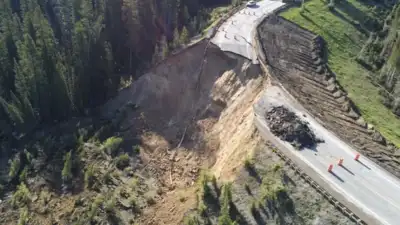
The appeals court issued its ruling on 30 October. The decision sends insurer PURE back to court to determine whether human activity helped cause two residential backyards to collapse down an 80-foot slope.
The Texas Third Court of Appeal in Austin overturned a trial court’s summary judgment in _Privilege Underwriters Reciprocal Exchange v, according to legal documents published by Justia Law. A legal dispute over home insurance coverage in Travis County has been sent back to court after a state appeals court ruled that an insurance company must provide evidence about what caused a major backyard landslide before refusing to pay a claim under its standard policy exclusions. Michael MacDougall and William Heyer_. The dispute began when the rear sections of neighbouring properties owned by Michael MacDougall and the estate of the late George S. Heyer Jr. suddenly collapsed. Large sections of land broke away and slid down a steep slope towards a local creek. The damage left both homes unsafe, with the buildings sitting dangerously close to the edge of the cliff.
It said the policy clearly excluded this type of damage, even if other factors had also played a role. They asked the insurer to cover structural repairs, work to stabilise the land and other related losses. PURE rejected the claims, pointing to the policy’s standard exclusion for earth movement and landslides. The insurer argued that natural movement of the land and damage to the slope caused the collapse. The homeowners then sued PURE for breach of contract and for failing to pay their claims on time under the Texas Insurance Code. The Travis County 250th District Court granted summary judgment in favour of the homeowners on the question of liability, making the insurer responsible for the loss. PURE later challenged that decision in the appeals court.
Because the exact cause of the land movement remains disputed, the appeals court ruled that neither side was entitled to summary judgment on liability as a matter of law. These included reports from geotechnical engineers Terrance Zich and Andrew Davidoff. PURE argued that their reports showed that natural environmental conditions were the main cause of the slope collapse. However, the three-judge panel found that the different expert opinions raised an important question that still needed to be answered. There was not enough agreement to determine whether the collapse was caused only by natural erosion or whether human activities also played a part. Possible human causes included construction work, changes to drainage systems and land management activities.
The appeals court reviewed expert statements submitted during the earlier court proceedings.