
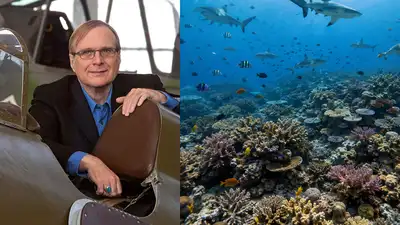
PC: wikipedia
In 2015, Microsoft co-founder Paul Allen launched Global FinPrint, a global survey that eventually deployed thousands of underwater cameras across coral reefs in 58 countries. Allen Family Foundation, with more than 120 researchers across the western Atlantic, the Indian Ocean, the Western Pacific and the Central Pacific. In total, more than 400 reefs were surveyed across 58 countries and territories, producing over 20,000 hours of footage. The study published in Nature, titled ‘ Global status and conservation potential of reef sharks ’, showed that sharks were absent from nearly 20% of the reefs surveyed.
Rather than using divers to conduct visual counts, the project relied on baited remote underwater video systems, or BRUVS According to Global FinPrint, researchers “usually set 30 to 100 BRUVS on a reef and record animal sightings for 60 minutes on each one.” The project was led by researchers at Florida International University and funded by the Paul G. The study linked this depletion to socio-economic factors including market proximity, poor governance, and population density, while also identifying shark sanctuaries, catch limits and marine protected areas as measures associated with higher shark abundance.
The research team drew on data from more than 15,000 standardised baited remote underwater video stations deployed on 371 reefs across 58 nations to estimate the global conservation status of reef sharks.
Much of what was previously known about sharks had been inferred from industrial fishery catch records, with far less information available about sharks living in coastal habitats.
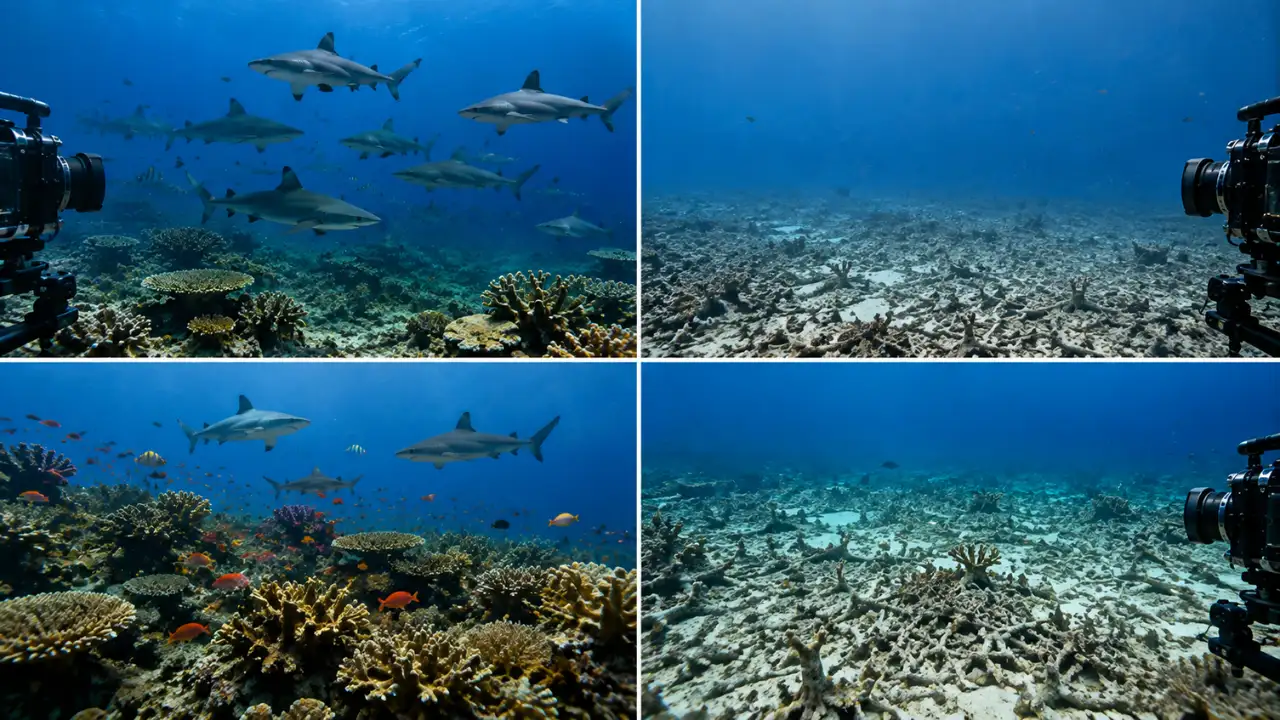
An estimated 100 million sharks are taken each year for their fins and meat, with many species suffering severe declines due to unregulated fishing.
The organisation notes that shark fishermen in most nations use the whole animal fins, skins, cartilage, jaws and meat rather than practising “finning” alone, meaning that without careful controls, catches can exceed the ability of many shark species to replenish their populations. One-quarter of sharks and their relatives are threatened with extinction, according to the IUCN Red List of Threatened Species. The loss of these predators, according to Global FinPrint, threatens the food security of nations that rely on fish for human consumption and threatens the dive tourism industry that relies on sharks as living attractions; while their absence can also disrupt the balance of marine food webs, causing large-scale habitat changes.
Building on these findings, the next phase of research seeks to improve understanding of how sharks influence other reef animals, and how the loss of sharks could disrupt the balance of coral reefs, often described as the ‘rainforests of the sea’, around the world.
Pingback: In 2013, Microsoft co-founder Paul Allen put $7 million: The wider industry impact