
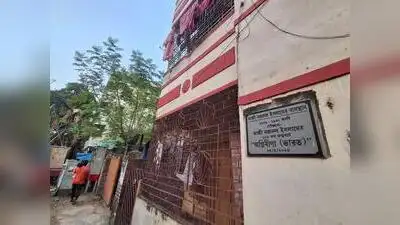
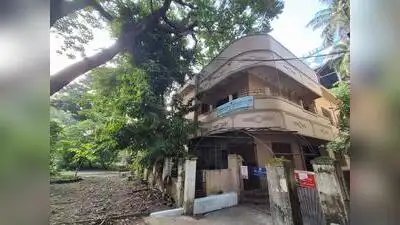
The house where Kazi Nazrul Islam lived in Tala
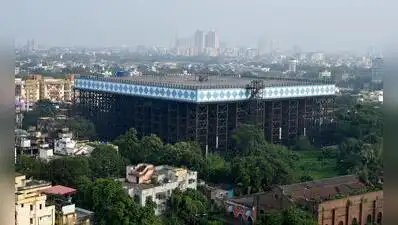
Tala was among 33 villages on the Calcutta side of the Hooghly that formed Dihi Panchannagram, a suburb beyond the Maratha Ditch. In 1717, Mughal emperor Farrukhsiyar granted East India Company the right to rent 38 villages surrounding its settlement. Five were across the Hooghly, in present-day Howrah district, and the remaining 33 were on the Calcutta side. After the fall of Siraj-ud-daulah, the last independent Nawab of Bengal, the company bought the villages from Mir Jafar in 1758 and reorganised them. Construction began on Nov 18, 1909, with both British and Indian companies contributing. The tank was inaugurated on May 16, 1911, in the presence of the lieutenant governor of Bengal, Sir Edward Baker. During World War II (1942–44), the Imperial Japanese Army Air Service bombed Kolkata. The structure remained intact even through major disasters like the cyclone Amphan in 2020.
Tala bridge Tala tank Tarasankar Bandyopadhyay’s house in Tala The house where Kazi Nazrul Islam lived in Tala Tala bridge Tala tank Tarasankar Bandyopadhyay’s house in Tala The house where Kazi Nazrul Islam lived in Tala Kolkata: Nestled in north Kolkata, Tala Park and Paikpara have historically served as the ecological “lungs” of the region, distinguished by vast water bodies (jheels), open spaces, mature trees, and rich biodiversity. Elocutionist and performer Urmimala Basu, who lives in the area, said, “In our para, the sons and daughters of Goddess Saraswati resided. I have lived here for the last 54 years, and it was an immense privilege to be in the presence of all these venerable people. ” She added, “I remember how every year during Dol Yatra, we gathered at Tarasankar Bandyopadhyay’s house for a grand feast. “The room where theatre personality Manoj Mitra used to write his stage plays was where we often sat for adda,” recalled Urmimala’s husband, recitation artiste Jagannath Basu. He added, “Kazi Nazrul Islam’s son Aniruddha used to practice his Hawaiian guitar, and we enjoyed listening from our home.”
History The name Tala traces its origin to the numerous ponds, or ‘talao’, in the area. Tala tank Around the turn of the 20th century, the city urgently needed an expanded water supply and required a large water tank. Babu Khelat Chandra Ghosh donated the land for its construction, and W B MacCabe, the chief engineer of Kolkata Corporation, designed the tank. To commemorate the contribution of Ghosh, the adjoining lane was named after him. Their primary aim was to hit the Tala tank and cripple the city’s water supply. To confuse Japanese pilots, grass was planted on the roof of the tank to give it the appearance of a sports field. it survived Although slightly damaged during the war. Writers’ neighbourhood Tala was once a vibrant hub of heritage and culture. Several legendary Bengali writers and poets lived in the Tala-Paikpara area, including Kazi Nazrul Islam. Recently, a portion of Tarasankar Bandyopadhyay’s house in Tala was taken over by Bangiya Sahitya Parishad to preserve his memory. Director-actor Nabyendu Chatterjee, director Aurobindo Mukhopadhyay, author Sailajananda Mukhopadhyay, and actor Premangsu Basu also lived in this neighbourhood. This neighbourhood carries a rich culture and heritage. We would offer abir at his feet to show our respect, followed by long adda sessions. Among other famous residents were Rabindra Sangeet artiste Pijuskanti Sarkar, authors Bimal Kar and Narendranath Mitra, and cartoonist Chandi Lahiri.
Poet Sajanikanta Das published the magazine ‘Shanibarer Chithi’ from his home near the spot where Tala Police Station stands today.
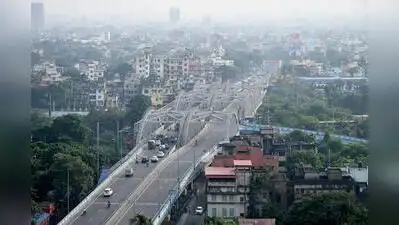
Tala bridge The famous Tala bridge, officially named Hemanta Setu, was built over Kolkata Circular Railway in 1962 to improve connectivity between Shyambazar and Kolkata’s northern suburbs. After decades of service, the structure grew weak, and demolition began in mid-2020. Eventually, a four-lane bridge was constructed in its place at Rs 468 crore. The new bridge, measuring 743.4 m in length, was officially opened to the public on Sept 22, 2022. Jain Temple Kolkata’s first and oldest Digambara Jain Temple was established in 1787 on approximately 15 bighas on the southern fringes of the Tala neighbourhood. The temple underwent major renovation and reconstruction in 1914. Tala Prattoy, once known as Tala Sarbojanin Durga Puja, started in 1925. Puja committee member Anjan Basu said, “Before 1925, there used to be a Durga Puja where members of underprivileged communities were not allowed entry. The name Tala Prattoy was adopted in 2017, when structural branding for the theme began. This puja was started through the initiative of a few locals, including freedom fighter Yogesh Ghosh, in 1921.
You Can Also Check: Gold Rate in Kolkata | Silver Rate in Kolkata | Bank Holidays in Kolkata | Public Holidays in Kolkata | Kolkata AQI | Weather in Kolkata | Petrol Price in Kolkata | Diesel Price in Kolkata | CNG Price in Kolkata | LPG Price in Kolkata Stay updated with the latest Kolkata news.
But we have seen dramatic improvements over time,” Urmimala said. Tarun Basu, a goalkeeper from the 1970s, belongs to this neighbourhood, and Goshta Behari Pal, the defender nicknamed “The Chinese Wall”, also resided in Tala. The roads were extremely poor. Additionally, iconic scenes from ‘Apur Sansar’ were shot at a dilapidated building near Tala post office. Sports The field adjacent to Tala Park, known as Gymkhana Ground, used to host Ranji Trophy matches. Three prominent names in local cricket — Belgachhia United Club, Paikpara Sporting Club, and Uttarpalli Milan Sangha — are based here. Before that, there was a wooden bridge. Following an accident involving a double-decker bus, the concrete bridge was constructed. Built in the Nagara style, its pillars and sculptures are intricately carved, echoing the designs of India’s ancient Jain temples and cave paintings. The central attraction of the temple is an 81ft-tall Manastambha (Pillar of Pride) crafted from pristine white marble. Durga Puja Tala Barowari and Tala Prattoy have become major crowd-pullers, both carrying nearly a century of local history and having witnessed the transformation of the entire neighbourhood. Opposing this discrimination, a few residents from this para started a separate puja. Later, Sailajananda Mukhopadhyay and Tarasankar Bandyopadhyay took the initiative to establish Tala Sarbojanin — including all members of the neighbourhood. After that, the venue changed several times; notably, during the Great Calcutta Killings, the puja was shifted inside a residential compound. On the other hand, Tala Barowari Durga Puja, near Tala post office, started shortly after World War I. This year, the puja is celebrating its 106th year. Download the TOI App.
“Earlier, we faced severe waterlogging and would be marooned for at least seven days.