
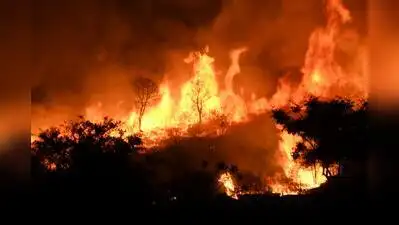
A file photo of forest fire in Bandipur Tiger Reserve of Karnataka
Bengaluru: Wildfires are increasing in the Eastern Ghats but declining sharply in the Western Ghats, highlighting contrasting fire patterns across southern India’s forests amid growing climate pressures and drought , a 21-year study has found. Titled Changing fire regimes in wildlife reserves of southern India: Trends, drivers, and conservation challenges , the study, published in the journal Ecosphere , analysed satellite data from 13 wildlife reserves across Eastern Ghats, Western Ghats and parts of Central India from 2002. Led by conservation scientist Dr Narendran Kodandapani of Centre for Wildlife Studies, Bengaluru, and co-authored by the centre’s CEO, Dr Krithi K Karanth, the study used Nasa ’s moderate resolution imaging spectroradiometer (MODIS) data to track burnt areas across nearly 200,000sqkm of protected landscapes. Climate and human-related factors together explained an average of 44% of the variation in fire activity across the 13 reserves, with the proportion ranging from 21% to 77% across individual reserves.
Drought emerged as a key driver, with climatic water deficit, soil moisture, temperature and other indicators of dryness showing varying associations with burnt areas across all reserves. The study called for region-specific fire management strategies that account for climatic conditions, species’ fire resilience, habitat characteristics and traditional burning practices among communities living along forest fringes. It also stressed the need for early-warning systems, better preparedness among forest departments and local communities, and long-term research to understand how climate change could reshape wildfire patterns.