
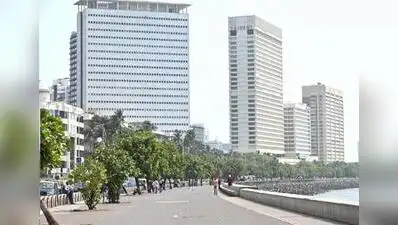
Mumbai has been highlighted as one of the major coastal cities at high risk from rising sea levels. The United Nations has issued warnings that increasing sea levels could exacerbate flooding, lead to displacement, and cause damage to essential infrastructure in low-lying urban areas.
Even under a very low greenhouse-gas emissions scenario, the Intergovernmental Panel on Climate Change (IPCC) projects global mean sea level to rise by about 0.23 metres by 2050. By 2100, the projected rise ranges from 0.28-0.55 metres under very low emissions to 0.63-1.01 metres under very high emissions, relative to 1995-2014 levels.
The UN says rising seas can cause saltwater intrusion into freshwater systems, affecting drinking-water security, agriculture and groundwater-dependent ecosystems. A low-probability, high-impact scenario could see the rise approach two metres. The report also flags the compounding impact of land subsidence, which can make relative sea-level rise substantially worse at the local level. Such combined effects can intensify flooding, coastal erosion, ecosystem degradation and the loss of lives and livelihoods. For Mumbai, this could have implications extending beyond coastal flooding. Damage to transport and other critical infrastructure can also trigger wider economic disruptions. It also stresses the need for better local data. Global models alone are insufficient for city-level planning, with the UN calling for stronger tide-gauge networks, high-resolution elevation and bathymetric data, satellite observations and local assessments of erosion, waves, sediment movement and saltwater intrusion. You Can Also Check: Gold Rate in Mumbai | Silver Rate in Mumbai | Bank Holidays in Mumbai | Public Holidays in Mumbai | Mumbai AQI | Weather in Mumbai | Petrol Price in Mumbai | Diesel Price in Mumbai | CNG Price in Mumbai | LPG Price in Mumbai