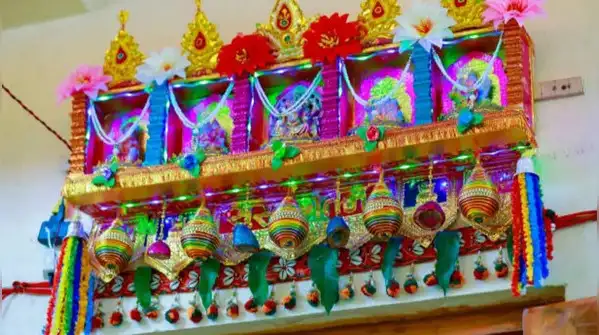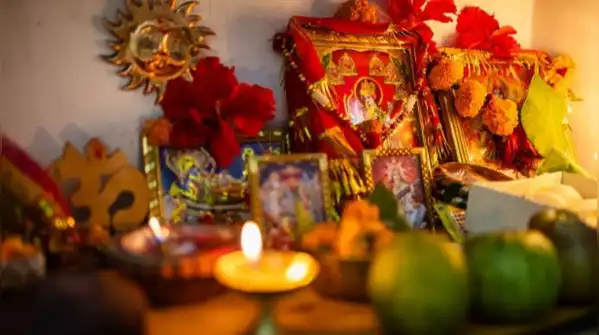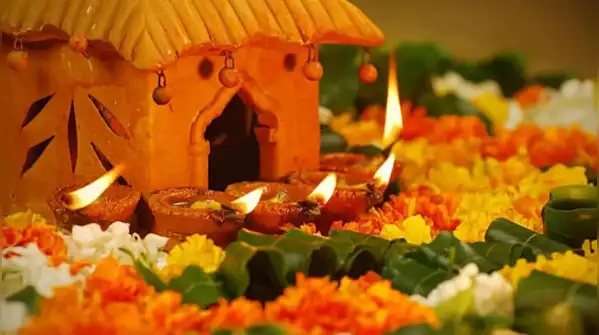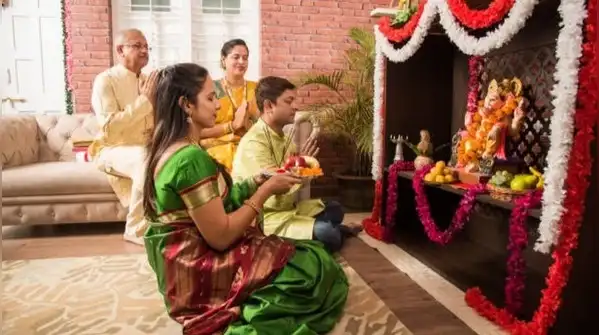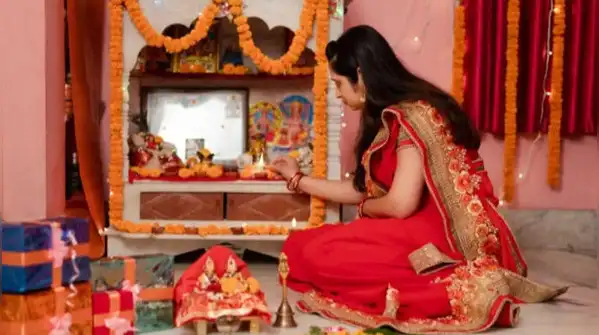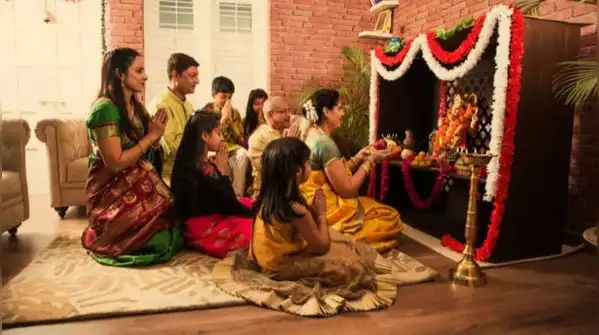
A beautiful puja corner doesn’t need a big budget or a trip to the market. Some of the loveliest home temples during Navratri are put together from things already around the house, a bit of fabric, a few flowers, some diyas and a little creativity. The goal is a space that feels warm, calm and welcoming, the kind where you actually want to sit for aarti each morning. Here are five easy, low-cost ideas to dress up your home temple for the nine days, none of which needs special skills.
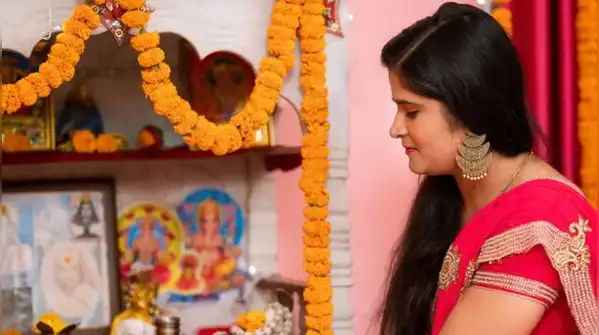
Begin by wiping the shelf or table and clearing away clutter, since a tidy space instantly looks more peaceful. Then lay down a fresh cloth to set the mood. A bright dupatta, an old silk saree border or a plain piece of fabric in red, yellow or orange works beautifully, and you can change the colour each day if you follow the nine-colour tradition. Smooth out the creases and tuck the edges neatly. It costs next to nothing, but it gives the whole corner a festive, finished look. Fresh flowers do most of the decorating for you. Marigolds are the classic Navratri choice and are usually cheap, and you can string them into a simple toran for the doorway or drape a garland around the frame of the idol. Scatter loose petals around the base, or float a few in a shallow bowl of water. Mango or ashoka leaves tied along a string make a lovely, traditional border. Keep flowers cool and away from the diya flame so they stay fresh for longer. Warm light turns an ordinary corner into something special. A few clay diyas cost very little, but you can also use small steel katoris, brass bowls or even clean shells as holders. Place them in a neat row or a small circle, away from the cloth and any hanging decorations, and never leave a lit diya unattended. Fairy lights add a soft glow too, strung around the shelf or draped behind the idol. Together they give the temple a cosy, glowing feel at evening aarti. A small rangoli in front of the temple is one of the simplest ways to make it feel complete. You don’t need an elaborate design. A simple pattern in rice flour, or with coloured powder, flower petals or even lentils and grains, looks charming. A circle of petals with a diya in the middle works well, and so does a stencil for beginners. Make it fresh each morning if you have time, or keep one design for the whole festival. It’s a lovely way to involve children, who often enjoy it most. The most memorable decorations are usually the ones made at home. Cut paper into garlands, fold origami lotuses, or paint a few old jars or bottles in festive colours to use as vases. A toran made from an old dupatta or scrap fabric, with a few bells or beads sewn on, adds charm without cost. Set out the kalash with a coconut and mango leaves, and arrange the puja items neatly on a thali. These small, handmade details make the space feel yours rather than store-bought. This article is intended for general informational and festive purposes only. Rituals and decoration customs vary across regions, communities and families, so readers should follow the traditions that suit their own beliefs. Take care with lit diyas, incense and open flames, and keep them away from fabric, flowers and decorations, especially around children and pets.