
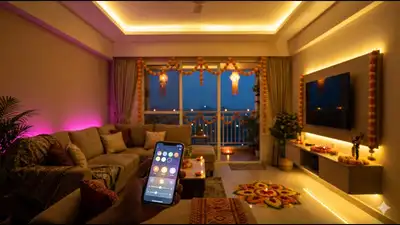
AI-generated image for representation
Because it uses LEDs. The rating and instructions for the complete setup matter, including the adapter, connections and extension cord, don’t assume an indoor strip is suitable for an exposed railing just.
Switching them off at the wall can therefore affect app-based operation Where supported, a lighting “scene” saves several choices so you can recall them together. Before choosing lights, decide how you’ll use each area. The entrance needs enough illumination for guests to see the doorway and move comfortably. The living room needs light for conversations, serving sweets and taking photographs. Decorative corners can use softer accents. A practical arrangement could combine a warm bulb near the entrance, an LED strip behind a living-room cabinet and a separate light directed towards a festive display. This approach also gives existing lights a role. A ceiling light can provide general illumination when needed, while the decorative layers create the evening setting. You don’t need to replace every bulb or outline every surface for the arrangement to feel different. LED strips offer several placement options, but the effect depends on where you place them. A visible strip creates a defined line of light. A concealed strip directs attention towards the surface it illuminates. Behind a sideboard, beneath a shelf or inside a ceiling recess, a strip can create a background glow around festive decorations. Along a window frame, it can give the display a clearer outline. Choosing one or two such features can help keep the room visually balanced. Plan the installation before you remove the adhesive backing. Measure the intended route, identify the nearest socket and check where the cable and power adapter will sit. Follow the manufacturer’s instructions on mounting, ventilation and whether the strip can be cut or extended. Colour-changing lights offer room to experiment, but a consistent palette can make the decorations feel more connected. Warm white or gold can form the background around flowers, lanterns and the puja area. A separate coloured accent behind the seating space can introduce a different mood for an evening gathering. Steady lighting is a useful starting point. Try colour cycles and animated effects in a smaller area before adding them to the full display. That makes it easier to judge whether the effect suits the room and the people using it. Brightness deserves the same attention. Decorative lights should complement the room’s general illumination, while leaving enough light around steps, doorways, and serving areas. An LED strip is not smart by default. Some products offer a fixed colour; others change colours via a remote control or app. Before you buy, ask a few simple questions: Does the light allow dimming, colour changes, schedules and saved settings? Can I control more than one light at a time? Do you need a separate device to control by voice? It’s better to check compatibility with the household’s router and control devices, as some smart lights require additional hardware. It also notes that most need standby power to remain controllable. Instead of adjusting each light separately, the household can select a setting prepared for the occasion. A puja scene could combine warm, steady lighting with a subdued background. A gathering scene could brighten the seating area and add colour behind a cabinet. A bedtime scene could switch off the decorative lights together. Schedules can handle another part of the routine by turning compatible lights on and off at selected times. Another household member should also know how to operate it. Balconies, terraces, and entrances need products suited to their installation conditions. The Electrical Safety Foundation International advises using appropriately rated cords, avoiding overloads and switching off electrical decorations before leaving home or going to bed. Timers can help establish that routine, but you still need to check the setup in person. Keep cables out of the way of people walking past, and keep electric lights and connections away from open flames. The most useful placement is often one that works beyond the festival. A concealed living-room strip can remain as background lighting, while a compatible smart bulb can return to an everyday white-light setting. Before packing away the decorations, review festive schedules and disable unnecessary routines. The same setup can then move from a seasonal display to lighting for evenings, meals or family gatherings. You use AI every day. Now get your AI Quotient. Take the AIQ test.
Features vary between products, so test the full setup before the celebrations.
Diwali lighting should have a purpose. For example, you could use warm lighting at the entrance to welcome visitors, concealed lights for decorations, and stored scenes to shift the living room’s atmosphere from puja to dinner. Smart lights add control to that setup, letting compatible bulbs and strips change brightness, colour, or operating hours. However, an effective setup starts with placement and planning. For a compact flat, start with one illuminated entrance, one softly lit gathering space, and one decorative highlight. This gives the home distinct points of interest while leaving room for diyas, flowers and rangoli to remain part of the display.