
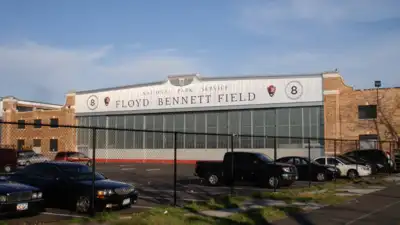
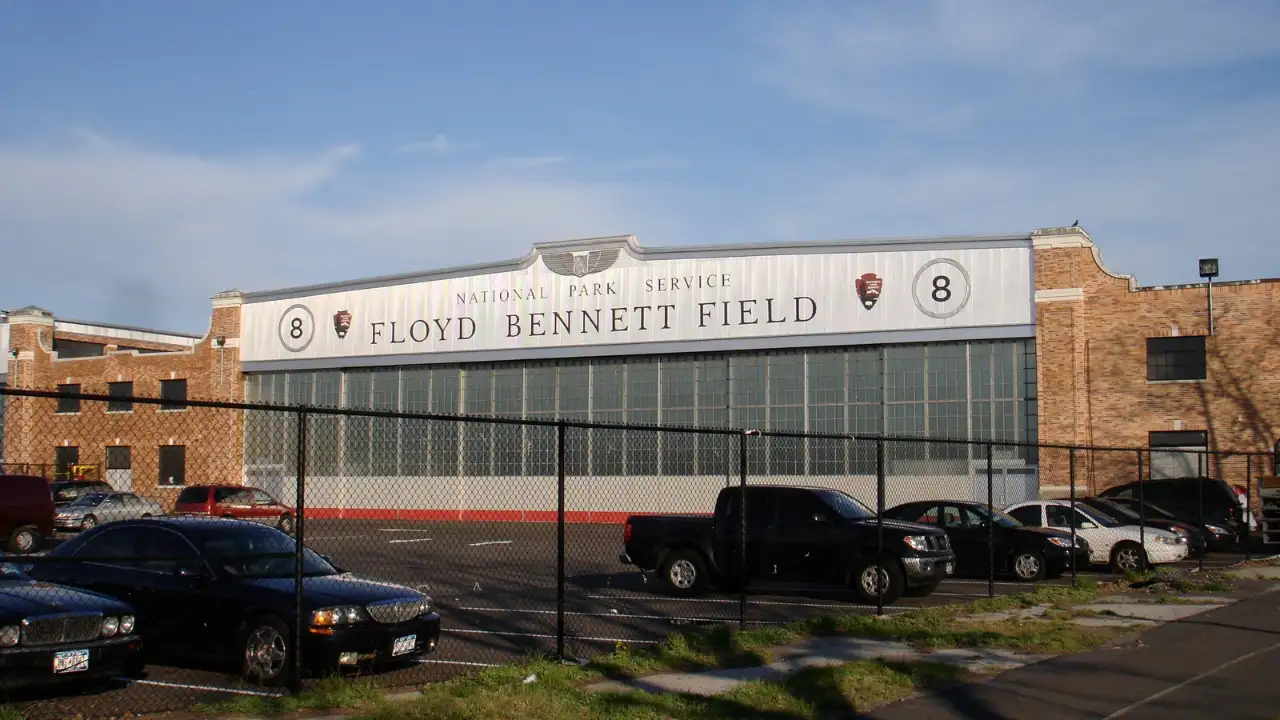
One of the original hangars | Wikimedia Commons
Construction took about three years, and the airport was dedicated on May 23, 1931, rather than opening as a completed municipal airport in 1928. A National Park Service historic district account notes that the airport was constructed between 1928 and 1931 by the city’s Department of Docks. The project included two main runways, each 100 feet wide, while additional runways were added later. That did not make the Brooklyn airfield irrelevant, since between 1931 and 1939, 26 flights that attempted to circle the world or cross the Atlantic began or ended at Floyd Bennett Field, according to the National Park Service.
The finished complex included concrete runways, four hangars and an administration building that served as the terminal. The site also included facilities for seaplanes, which reflected the importance of Jamaica Bay to the airport’s design. Floyd Bennett Field never became the commercial success city officials had hoped for, and New York eventually developed another municipal airport closer to the city’s transportation network.
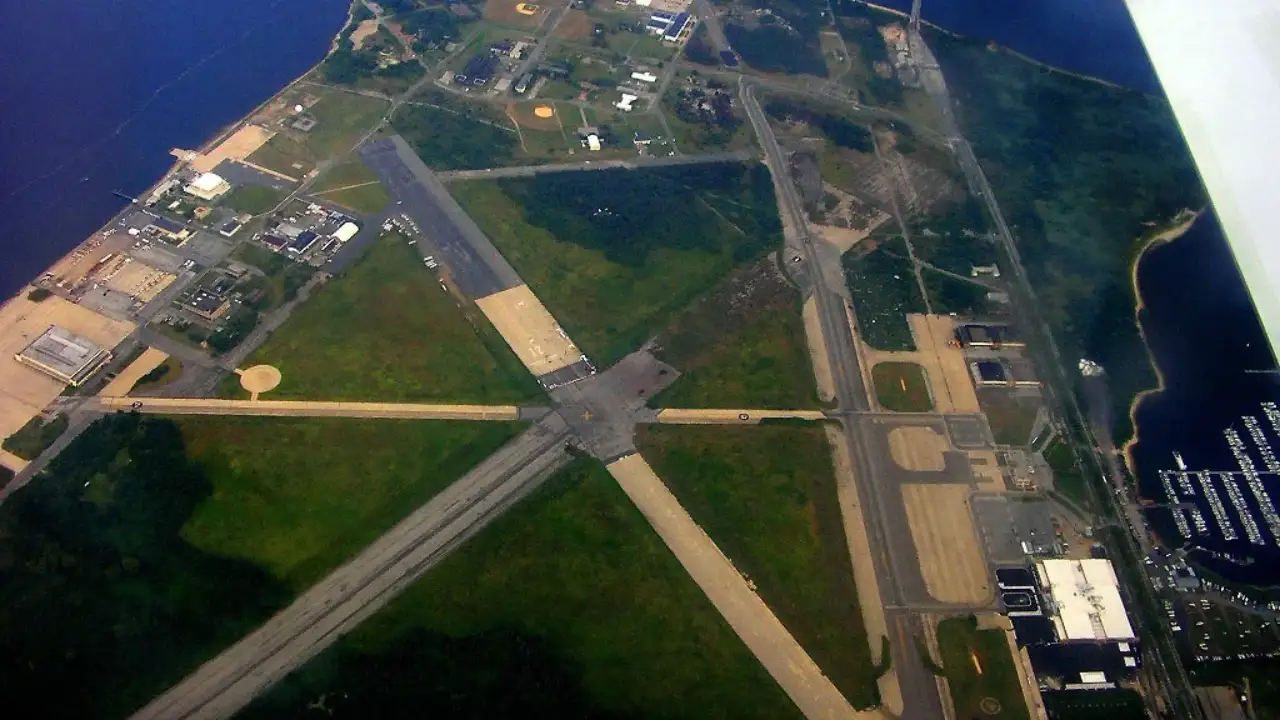
The National Park Service now describes the area as containing more than 1,300 acres of grassland, saltmarshes, tidal mudflats, a marina and the former airfield. The National Park Service is rehabilitating Hangars 3 and 4 as part of a $25 million project intended to preserve the buildings and their Art Deco-era commercial aviation architecture.
The field is open daily, according to the National Park Service. The original control tower and terminal building survive, with the terminal now operating as the William Fitts Ryan Visitor Center. The National Park Service manages the grasslands as habitat, and the site’s open landscape supports birds and other wildlife in an area surrounded by one of the country’s largest metropolitan regions. Some of the historic aviation structures also remain. Visitors can now use parts of the former airport for activities including biking, fishing, bird watching, archery and other recreation.