
Image(s): Wikipedia/Lucas Museum of Narrative Art
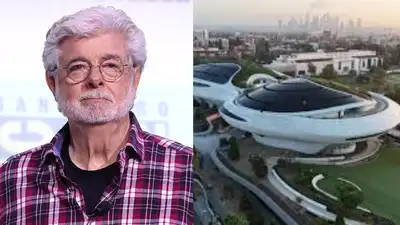
Speaking at a press preview, Lucas described the process as a 17-year struggle involving rejected plans, different cities and years spent getting the final building constructed. The museum occupies 300,000 square feet, including around 100,000 square feet of gallery space. The $1 billion museum looks like a spaceship (Image: AI Generated) Lucas did not set out to create a conventional museum focused only on traditional fine art. Its 35 galleries are arranged around themes including adventure, motherhood, community, childhood illustration, manga and comics. The Lucas Museum of Narrative Art is scheduled to open to the public on September 22, 2026, after years of construction and planning. After 17 years of uncertainty, the futuristic building is finally ready to tell its own story.
As reported by Los Angeles Times, Lucas said the experience had involved “17 years between getting kicked out of cities” and trying to make the project happen. Its wider campus includes 11 acres of public parkland, an amphitheatre, seating areas and a large fountain called “The Rain”, which also helps cool the building. Lucas has personally shaped the collection over the years, with Hobson saying he effectively dreamed up the museum “from the outside in” and curated it piece by piece. The filmmaker has said one of his strongest motivations was to honour illustrators whose images can give visual form to stories and myths. Hobson describes it as a museum “by the people, for the people”, while Lucas frames it as a home for “the people’s art”.
Lucas and his wife, Mellody Hobson, initially explored locations in Chicago and San Francisco, but neither plan ultimately became the home of the museum. He acknowledged that the process nearly broke his determination, despite his reputation for taking on seemingly impossible projects. Eventually, Exposition Park in Los Angeles became the chosen location, giving the museum a permanent home. The building itself may be almost as recognisable as the collection it houses. Designed by Chinese architect Ma Yansong and his firm MAD, the Lucas Museum has an enormous, flowing form that appears to hover above its surroundings. Its unusual silhouette has led many people to compare it with a spaceship, an especially fitting description for a museum founded by the creator of Star Wars. Yansong, however, has also heard the structure compared with a cloud, and welcomed both interpretations. His intention was to create a building that would make people curious before they even entered it. Instead, the institution centres on narrative art, visual works that communicate stories, characters, myths and ideas. The collection also includes dedicated spaces for artists such as Norman Rockwell, N.C. Wyeth, Frank Frazetta and Maxfield Parrish, alongside a gallery devoted to murals. The long wait is now approaching its final chapter. Interest has already been building, with visitors reportedly gathering around the site during the summer to catch glimpses of the unusual structure and secure opening-day tickets. The museum is designed to be more than a collection of galleries. Its public park, amphitheatre, fountain, library, café and rooftop Skywalker Grill are intended to make the institution part of everyday life in Los Angeles. For Lucas and Hobson, that accessibility is central to the project’s identity. Catch the latest World News and Live updates. Download the TOI app.
The journey began long before the striking Los Angeles building appeared on the horizon.
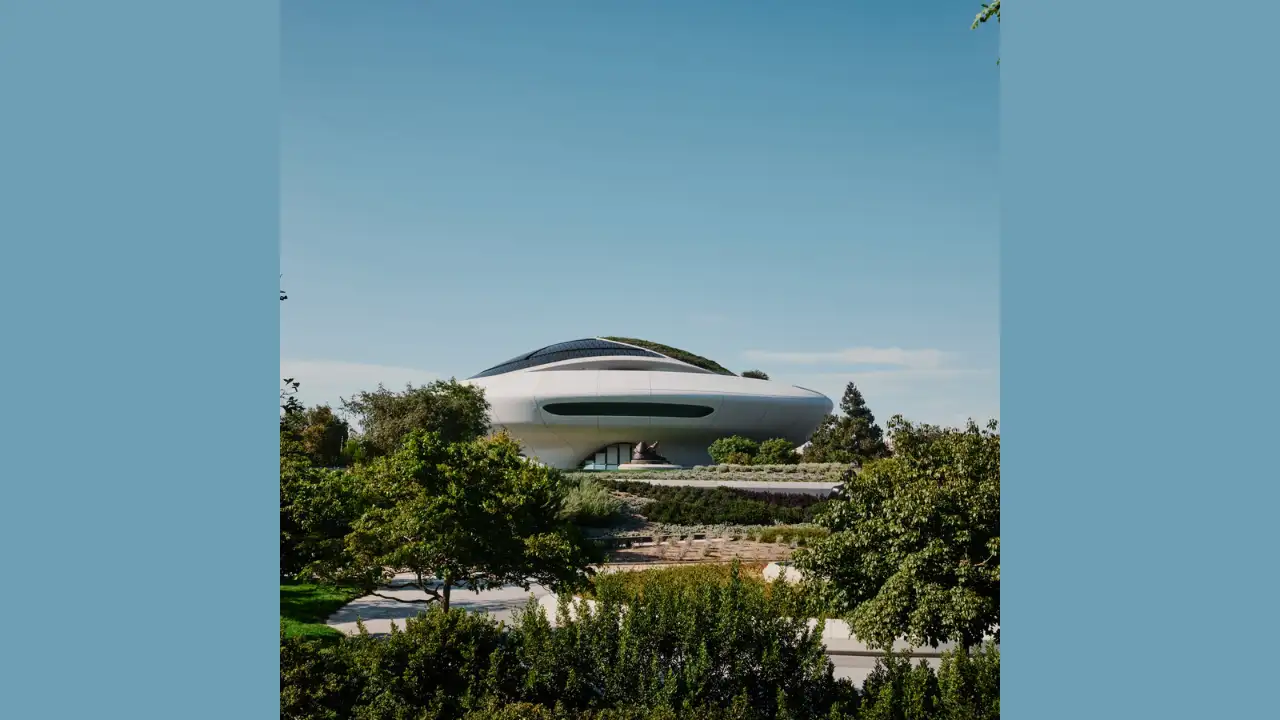
Now, after 17 years of setbacks, his $1 billion Lucas Museum of Narrative Art is preparing to open at Exposition Park on September 22, 2026. Designed by architect Ma Yansong and his firm MAD, the futuristic building rises above an 11-acre public park and has already attracted comparisons to a spaceship and a cloud. For nearly two decades, George Lucas pursued a museum that existed first as an idea and then as an increasingly ambitious architectural dream. Inside, visitors will find a vast collection devoted to storytelling through art, illustration, comics and film. For Lucas, the museum represents far more than another cultural institution, it is the realisation of a project he once feared might never happen.
The filmmaker behind Star Wars and Indiana Jones faced rejected plans, changing locations and years of bureaucracy before the project finally took shape in Los Angeles.