
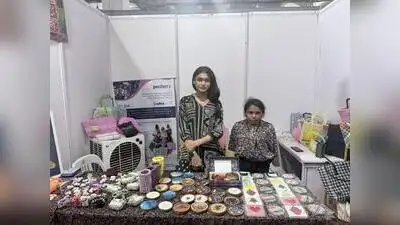
Trans artisans selling hand crafted Kudai and Mosiac items at the Yellow Ribbon Fair in Pune
Because they are not accepted by their families or because of the other challenges transgender people face, “The people who join us are those who genuinely need a job, whether.
As materials and consumer preferences changed, the craft evolved, with contemporary makers experimenting with wire and other materials while retaining the basic woven structure and forms,” said Neelam Jain, founder of the NGO. At the workshop, the painstaking process can take a day or more for more intricate pieces,” said Jain. “We don’t think livelihood should depend on whether something sells that month,” Jain said. We identify where they need support and train them in-house,” said Jain.
At PeriFerry’s Pune workshop, in-house teams of experienced artisans and workers teach and help newer members learn the techniques. Among them are two transgender women who have taken on leadership roles, with one overseeing the artisan team and another who is an artisan and in charge of quality control. “One of the craft traditions is kudai, a form of basketry associated with Tamil Nadu. Traditionally, women made these baskets by weaving and shaping palm leaves into containers used for everyday purposes. “The other major craft is mosaic. Small pieces of glass are cut and shaped before being assembled into patterns, images and decorative works. The practice draws on traditions found across Europe and the Middle East, where mosaic has been used for centuries in architecture and art. Artisans are paid a monthly salary rather than being dependent on individual sales. Accommodation and basic food are also provided, an important consideration for workers who can struggle to find housing.